You spent $200 on a new durable-grit paddle, and the face grabs the ball like Velcro. Yet ten minutes into indoor open play, the handle is twisting in your sweaty hand. The fix costs about three dollars: a pickleball overgrip. This guide covers when you need one, tacky versus dry, how to wrap it in six steps and how often to swap it. It also explains why “grip” and “grit” are two different problems.
Overgrip vs replacement grip
| Overgrip | Replacement grip | |
|---|---|---|
| What it is | A thin wrap that goes over the existing grip | A thicker, cushioned wrap that replaces the factory grip |
| Thickness | Thin, often around 0.5–0.75 mm | Thicker, with more cushion |
| Lifespan | Weeks | Months |
| Cost | A few dollars each, usually sold in multipacks | Several dollars each |
| Use it to | Add tack or absorb sweat, or build the handle up slightly | Fix a torn, flattened or hard base grip |
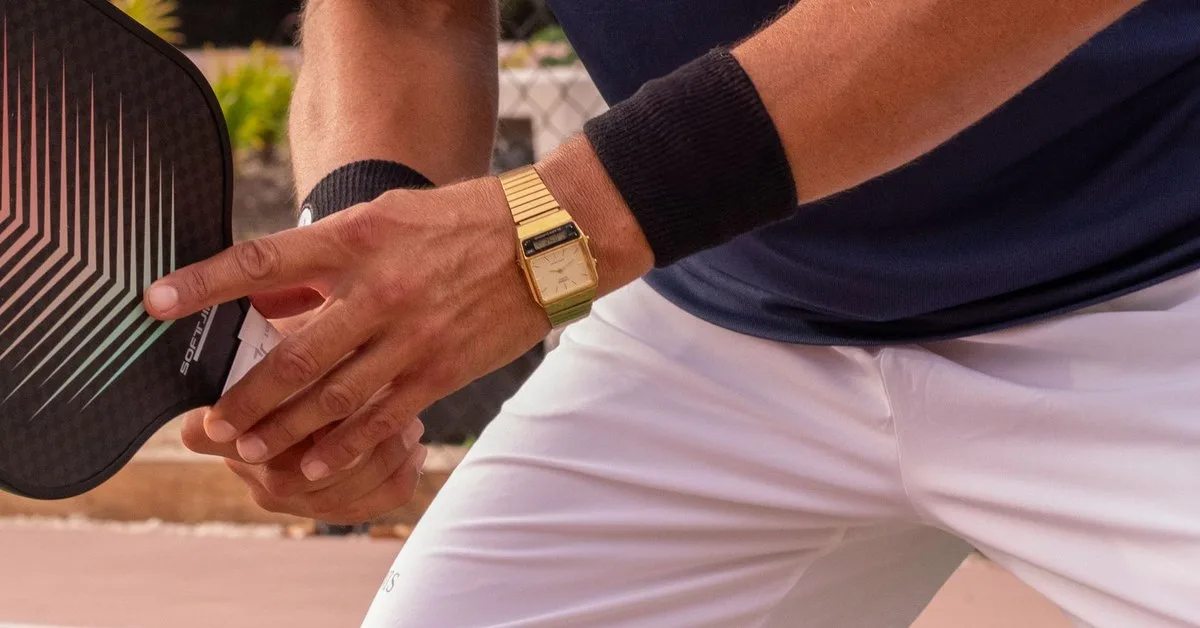
Most players keep the factory grip and add overgrips on top. They replace the base grip only when it’s damaged.
Do you need an overgrip? Three questions
- Is your handle too small? If your fingertips dig into your palm or the paddle twists on off-center hits, add an overgrip. Each wrap adds a little thickness, and some players stack two.
- Do your hands sweat, especially indoors? Choose a dry, absorbent overgrip and keep a spare in your bag for long sessions.
- Is the base grip torn, compressed or hard? Don’t bury it under more wraps. Replace the base grip first, then add an overgrip if you want.
If you answered no to all three, you can skip the overgrip for now. If you answered yes to one, a three-pack is the cheapest upgrade in your bag.
Tacky vs dry overgrips (indoor vs outdoor)
Tacky overgrips feel slightly sticky and work best for players whose hands stay mostly dry: outdoor play in cool weather, or players who like a locked-in feel. Dry overgrips feel like soft felt and soak up sweat. They’re the indoor pick, because gyms get warm and humid once the courts are full.
Moving inside for the winter? Our indoor pickleball guide covers the season shift, and indoor vs outdoor pickleball balls covers the other gear change you’ll notice right away.
For a sense of price: in late October, JustPaddles listed Pickleskins overgrips (a 0.5 mm Thin Sliced three-pack at about $7.99, plus the Dry Dill-ight and Grippy Gherkin lines at about $9.99) and Bread & Butter replacement grips at about $6.99. Prices change, so check the current listing.
Browse JustPaddles grips
OVERGRIPS · REPLACEMENT GRIPS · TACKY · DRYSlick handle? Compare tacky and dry overgrips and replacement grips, the cheapest upgrade in your bag.
Affiliate link · confirm model and current termsHow to wrap a pickleball overgrip in 6 steps
- Peel the backing off the overgrip and remove the finishing tape from the package. Keep it handy.
- Start at the butt cap. Lay the tapered end at the bottom of the handle, angled slightly, and hold it with your thumb.
- Pick your direction. Right-handers usually wrap clockwise (looking down at the butt cap) and left-handers counterclockwise, so the overlap edges point away from how your hand pushes.
- Wrap with steady tension, overlapping each pass by about an eighth of an inch. Pull gently. Too much stretch makes the wrap thin and short.
- Stop near the throat, at the top of the handle, and trim the excess at an angle so the end lies flat.
- Tape the end with the finishing strip, pressing it down all the way around. Squeeze the handle to check that nothing slides.
Your first wrap will look lumpy. By the third you’ll be done in under two minutes.
Common wrapping mistakes
- Wrapping the wrong direction. The edges catch your palm and peel within a session. Unwrap it and go the other way.
- Too much stretch. Over-pulling thins the wrap, and you run out before the top of the handle.
- Uneven overlap. Gaps show the base grip and feel like ridges. Keep the overlap consistent.
- Covering the butt cap logo. Fine for feel, but if you’re selling the paddle later, leave the cap clean.
- Skipping the finishing tape. The end will unravel mid-game, usually at 9–9.
Keep a spare overgrip and a strip of tape in your bag’s side pocket. A slick handle mid-session is a two-minute fix if you’re prepared, and a frustrating afternoon if you’re not.
How often to replace an overgrip
| You play… | Swap about… |
|---|---|
| Once a week | Every month or so |
| 2–3 times a week | Every 2–3 weeks |
| Daily, or sweaty indoor sessions | Every week, or whenever it feels slick |
That’s a rule of thumb, not a schedule. Change it when the wrap looks shiny, feels slippery, or has started to tear at the top edge. Tournament players often put on a fresh wrap the night before an event.
Amazon Prime
FREE DELIVERY · TV · EXCLUSIVE DEALSFree delivery, award-winning TV, exclusive deals, and more. Prime is only $14.99/month plus tax; cancel anytime.
Affiliate link · terms on AmazonGrip vs grit: what durable-grit paddles do and don’t fix
This fall’s paddle releases are all about durable grit: faces built to keep their spin texture instead of going smooth after a few months. The Bread & Butter Loco 2, JOOLA’s POWER FX line and Enhance’s ArmorGrit upgrade all push in that direction. Industry newsletter dinkfeed called it the “grit arms race.”
Grit is about the ball meeting the face. Grip is about your hand meeting the handle. Durable grit can’t stop a sweaty palm from sliding, and grit sprays and tapes on the face won’t make a small handle fit your hand. If your shots go where you aim but the paddle turns in your hand, the fix is an overgrip. If the handle feels great but the ball won’t spin, it’s the face. Our roundup of the best pickleball paddles of 2026 covers that side.
Pickleball overgrip FAQ
Does an overgrip change the handle size?
Slightly. One thin wrap adds a small amount of circumference, and two wraps add noticeably more. If the handle is much too small, a thicker replacement grip plus an overgrip works better than stacking three or four wraps.
Can I use tennis overgrips on a pickleball paddle?
Yes. Tennis overgrips fit fine and are often cheaper in bulk. They’re longer than a pickleball handle needs, so you’ll trim more off the end.
Which direction do left-handed players wrap?
Opposite to right-handers: usually counterclockwise when looking at the butt cap. The goal is for the overlapping edges to face away from the pressure of your hand, so they don’t peel up.
Should I remove the old overgrip first?
Yes. Stacking a new overgrip on a worn one adds bulk and traps sweat. Unwrap the old one, then wrap fresh over the base grip.
The bottom line: grit is for the ball and grip is for your hand. If the handle slips, a fresh pickleball overgrip is the fastest, cheapest fix in the game.